Choose single-sided if one display face can reach your intended audience. Pay extra for double-sided only when the rear face has its own audience and message. A wall-mounted menu rarely needs two faces. A shop-window display with an offer facing the street and product information facing the store can use both.
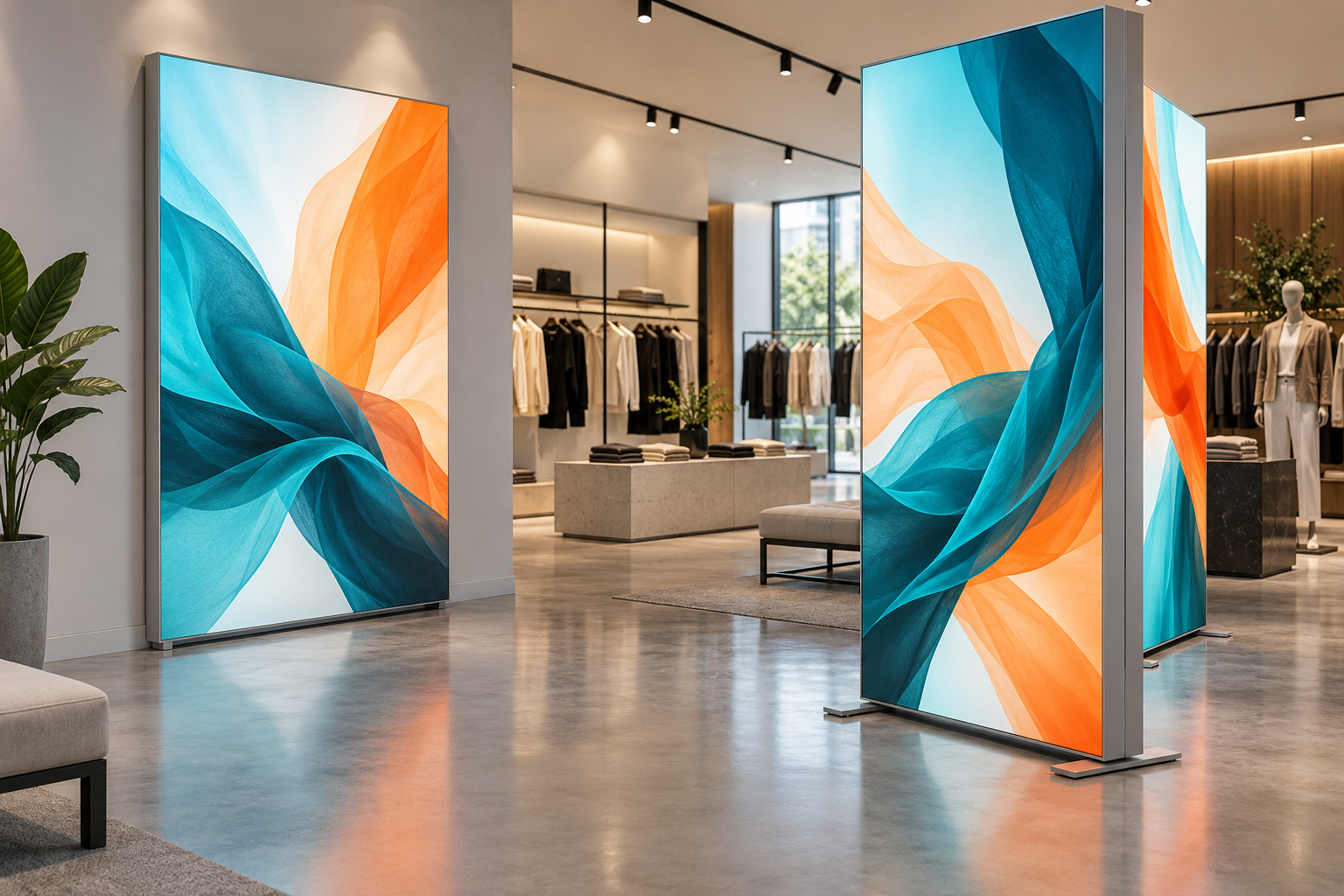
When comparing LED lightbox displays, ask for quotes at the same visible size, graphic specification, and brightness requirement. Two faces do not automatically mean twice the brightness, electricity use, or advertising value.
Which Model Fits Your Location?
| Location | Choice | What Could Change the Decision? |
|---|---|---|
| Wall, menu board, or checkout backdrop | Single-sided | A second face has no use when the back sits against a wall. |
| Shop window | Double-sided if both faces carry useful information | Choose single-sided if props or shelving hide the indoor face. |
| Two-way aisle or open exhibition booth | Double-sided | If people approach mainly from the edge, adjust the angle before choosing the display. |
| Two separate display positions | Two single-sided units | Include two sets of supports, power connections, and installation charges in the comparison. |
| Outdoor sign | Single-sided against a wall; double-sided when projecting toward two-way traffic | Either option needs documented outdoor suitability and a mounting plan for the site. |
Before ordering, mark the frame and base dimensions on the floor plan. Walk toward the position from each entrance and check for blocked sightlines. For a window installation, inspect a lit sample through the glass in daylight and after dark.
How Much More Does Double-Sided Cost?
The extra graphic can cost more over time than the extra electricity. The difference depends on whether you update both faces together or leave a permanent brand image on the back.
This calculation uses hypothetical figures, not Milin prices or standard product specifications: a 60W single-sided unit, a 100W double-sided unit, 12 operating hours per day, 365 days per year, and electricity at RMB 1 per kWh. Each replacement graphic costs RMB 150. The two units are not assumed to have equal brightness.
| Expense | Calculation | Extra Cost |
|---|---|---|
| Purchase and initial installation | Assumed difference between two complete quotes | RMB 600 |
| Electricity | 40W ÷ 1,000 × 12 hours × 365 days × 3 years × RMB 1 | RMB 525.60 |
| Replacement rear graphics | 12 additional graphics × RMB 150 | RMB 1,800 |
| Total of listed differences | Both faces updated 12 times after purchase | RMB 2,925.60 |
If the rear graphic stays unchanged for three years, the difference falls to RMB 1,125.60. Both figures exclude later shipping, graphic-changing labor, and repairs.
For your own calculation, multiply operating power in kilowatts by running hours and the electricity price per kWh.[1] Use actual operating power where available; dimmed operation may draw less than the rated maximum.
Check the Lit Graphic, Not Just the Watts
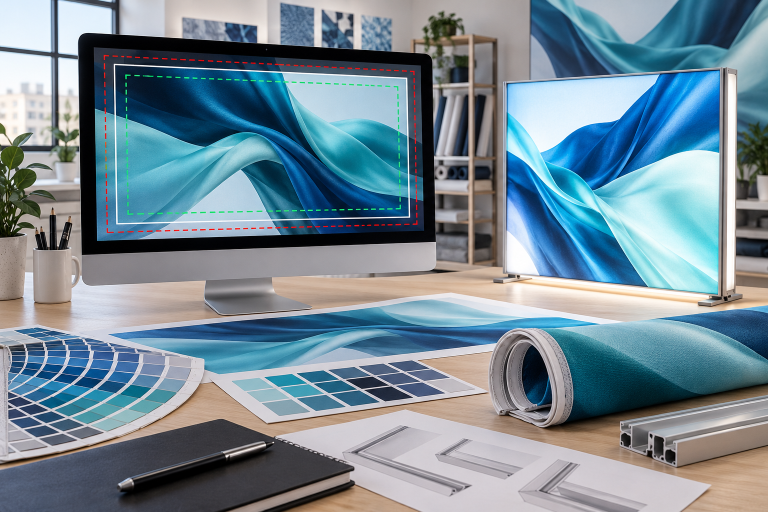
Ask the supplier to fit your artwork to the sample. For a SEG fabric LED lightbox, use the specified backlit fabric and the template for the selected frame size.
- Brightness: Compare the same visible area, printed artwork, material, and dimming setting. Ask for readings from both faces of a double-sided unit, with measurement positions identified.
- Even lighting: Inspect the center, corners, and edges for dark patches, LED dots, bright strips, or color differences.
- Show-through: On models without separate light-blocking compartments, install both graphics and check whether rear text or colors appear through pale areas.
- Readability: Read menu prices from the ordering position and promotional text from the customer’s approach. A bright panel is not enough if reflections hide the message.
Get Installation and Maintenance in the Quote
| Item | Details to Confirm |
|---|---|
| Frame and supports | Outer and visible dimensions, weight, base footprint, mounting hardware, and maintenance clearance. |
| Graphics | Number included, material, replacement price, and whether each face can be changed separately. |
| Electrical configuration | Total input power, destination voltage and plug, dimming, and independent switching if required. |
| Delivery and service | Shipping, taxes, installation, replacement parts, warranty periods, and responsibility for removal and refitting costs. |
| Outdoor specification | Complete-unit protection documents, operating temperature limits, weather resistance, and site-specific fixing requirements. |
Watch a graphic change before approving the order. Check whether it requires tools, two people, or removal of the entire unit. A high-mounted lightbox may need access equipment for every update.
For outdoor use, an IP rating on the LED strips does not establish the protection of the complete lightbox. IP65 covers dust-tight protection and specified water-jet testing; immersion has separate ratings.[2] Wind resistance and UV resistance need separate confirmation.
Can You Switch Off One Face?
Only if the lighting and controls support it. Some double-sided models share a light source or circuit. If you need the street-facing side on while the indoor side stays off, put that requirement in the order and ask for a demonstration.
Can You Add a Second Face Later?
Do not buy a single-sided unit assuming you can remove its back panel later. The panel may support the frame, reflect light, or block unwanted light. Get the manufacturer’s conversion parts list and price first; the work may involve the frame, LEDs, power supply, and graphic fixings.