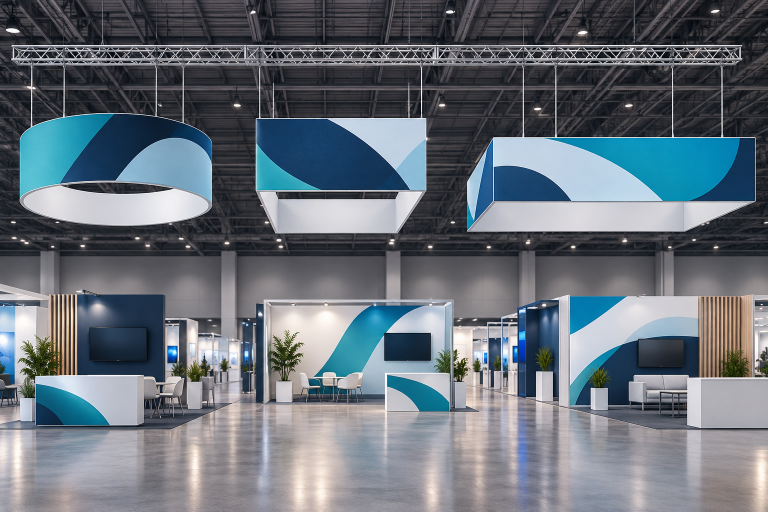
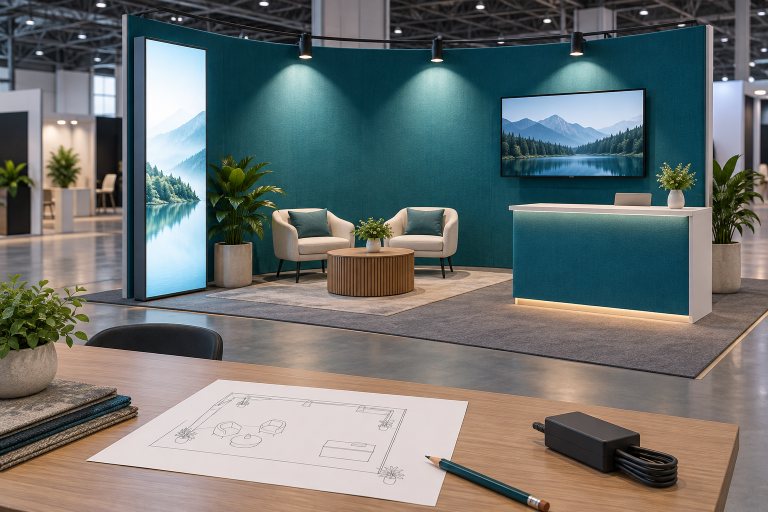
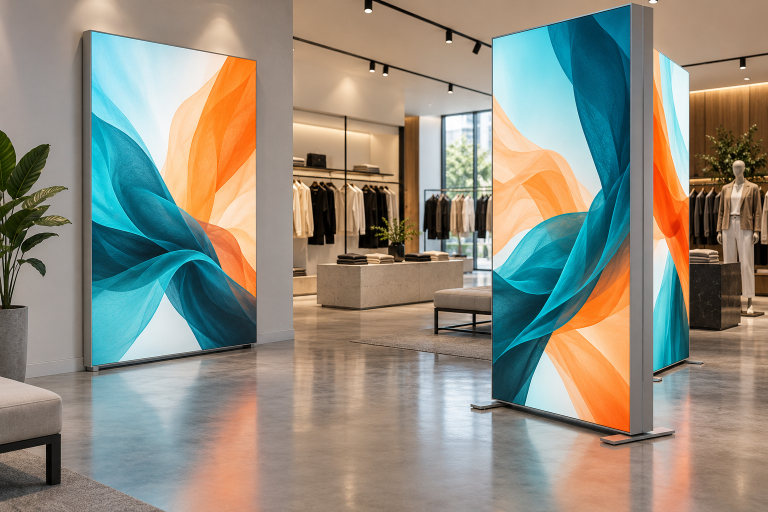
A China exhibition booth manufacturer is usually better for custom parts, repeat orders, and reusable booth systems. A local supplier is usually better for one-time rental booths, short schedules, and projects that depend heavily on local labor or venue services.
For many international events, the most practical choice is a mixed plan: manufacture branded and reusable parts in China, then rent standard furniture, flooring, screens, truss, electrical services, and installation labor near the venue.
Do not compare factory prices alone. Compare the full cost of design, production, packing, freight, customs, venue handling, installation, dismantling, storage, repairs, and disposal.

Choose the Right Supply Model
| Option | Best for | Main risk |
|---|---|---|
| China manufacturer | Custom parts, repeat orders, reusable structures, several booths | Longer planning time, freight, customs, and local installation |
| Local supplier | One-time booths, rental systems, short schedules, complex venue work | Higher local production or labor costs and less reuse value |
| Mixed plan | Custom branding combined with local rental and installation | Unclear responsibility between the factory and local contractor |
A China manufacturer normally produces the main frame, counters, product displays, lightboxes, shelves, arches, graphics, or custom furniture before shipping them to the event country.
This works well when the booth has many custom pieces or will be used more than once. A modular aluminum exhibition booth, for example, can use the same frame with new graphics or a different layout at later events.
A local supplier normally provides local production, rental equipment, transport, installation, dismantling, and venue services. Local custom production and local rental are different. A custom booth may belong to the exhibitor, while a rental booth normally returns to the supplier after the event.
A mixed plan reduces unnecessary shipping. Custom counters, branded displays, reusable frames, and lightboxes can be made in China. Standard chairs, carpet, televisions, truss, electricity, forklift services, cleaning, and labor can be ordered locally.
Use Booth Size Only as a Planning Example
Booth size affects design work, freight volume, labor, approval, and installation time. The following ranges are useful for planning, but they are not fixed industry standards.
| Example project size | Area | Common features |
|---|---|---|
| Small booth | 9–18 m² | Standard walls, one counter, one screen, simple graphics, limited storage |
| Medium booth | 36–72 m² | Custom displays, storage room, several screens, lightboxes, meeting area |
| Large booth | 100 m² or more | Large products, rigging, meeting rooms, enclosed areas, complex installation |
A small one-time booth based mainly on rental parts often favors a local supplier. A medium booth with custom displays may favor a mixed plan. A large booth requires a full comparison because freight savings, labor rules, rigging, and venue handling can change the result.
Compare the Full Project Cost
The lowest production price is not always the lowest final cost. Use the same cost list for every supplier.
Full project cost = design + production + packing + freight + insurance + customs and tax + local delivery + venue services + installation + dismantling + storage or disposal
Keep a separate internal budget for uncertain costs such as customs inspections, overtime labor, damaged graphics, missing parts, storage delays, or urgent local repairs. This extra budget is not a supplier charge unless the supplier is actually providing that service.
| Cost item | China manufacturer | Local supplier | Included? |
|---|---|---|---|
| Design and technical drawings | |||
| Main structure and custom parts | |||
| Graphics and lighting | |||
| Furniture and screens | |||
| Trial assembly and inspection | |||
| Export packing | |||
| International freight and insurance | |||
| Customs clearance, duty, and tax | |||
| Venue delivery and unloading | |||
| Venue material handling | |||
| Installation labor | |||
| Electrical work and rigging | |||
| Cleaning and waste removal | |||
| Dismantling | |||
| Storage, return freight, or disposal | |||
| Total |
Do not accept a quotation that only says “custom booth: USD 30,000.” Ask what materials, quantities, drawings, transport, installation, taxes, revisions, and venue services are included.
See How a Low Factory Price Can Change
The following figures are a calculation example, not market averages.
| Cost item | Example amount |
|---|---|
| China production | USD 24,000 |
| Export packing | USD 2,500 |
| International freight and insurance | USD 5,500 |
| Customs, tax, and broker fees | USD 3,000 |
| Local delivery and venue handling | USD 4,000 |
| Installation and dismantling | USD 8,000 |
| Electrical work, cleaning, and other venue services | USD 3,500 |
| Example total installed cost | USD 50,500 |
In this example, the USD 24,000 factory price is only about 47.5% of the USD 50,500 installed cost. The example does not prove that overseas production is expensive. It shows why freight, customs, venue services, and labor must be included before making a decision.
Compare Adjusted Quotes, Not Headline Prices
| Quote | Headline price | Important exclusions | Adjusted comparison |
|---|---|---|---|
| Supplier A | USD 28,000 | Freight, tax, installation, venue handling | USD 46,000 |
| Supplier B | USD 39,000 | Electricity and internet only | USD 43,000 |
Supplier A appears USD 11,000 cheaper at first. After the missing services are added, Supplier B is USD 3,000 cheaper. This is why every supplier should receive the same request and quote the same scope.
Send Every Supplier the Same Information
- Event name, city, venue, and booth number
- Booth width, depth, height limit, and open sides
- Move-in, opening, closing, and move-out dates
- Organizer and venue manuals
- Required reception, meeting, storage, and display areas
- Product sizes, weights, power needs, and delivery method
- Final logo files and graphic requirements
- Screen, lighting, internet, and power requirements
- Furniture and storage requirements
- Whether the booth will be rented, purchased, or reused
- Which party will handle shipping, customs, and installation
- Required currency and tax treatment
If one supplier receives complete technical information and another receives only a rendering, their quotations will not cover the same work.
Check the Supplier and Materials
Supplier location does not decide quality. Check how the supplier designs, produces, inspects, packs, and supports the booth.
Ask whether the company owns the factory, uses a regular partner factory, or outsources each project. A trading company can still manage a project well, but you need to know who controls the materials, schedule, inspection, corrections, and packing.
Request a live factory video call. Ask to see current production, metalwork, printing, electrical assembly, trial-assembly space, material storage, finished components, and packing areas. You can review the supplier’s company and manufacturing information, but website claims should not replace project-specific evidence.
Do not accept vague terms such as “premium aluminum,” “high-quality wood,” or “eco-friendly board.” The quotation and contract should state:
- Material type and thickness
- Aluminum profile size
- Internal frame or support method
- Paint, laminate, or surface finish
- Glass and acrylic thickness
- Flooring type
- Graphic fabric or film type
- Lighting model, voltage, and power
- Connectors, hinges, locks, and other hardware
- Required fire test or material documents
If color and finish matter, approve physical samples. Screen images cannot reliably show the final paint, metal, fabric, printed color, or lighting effect.
Set Clear Inspection Standards
- Finished dimensions and allowed tolerances
- Wall, counter, shelf, and platform stability
- Surface flatness and consistent paint or laminate
- Visible scratches, dents, chips, or exposed fixings
- Door, drawer, hinge, and lock operation
- Graphic size, position, color, and alignment
- Lighting and electrical function
- Screen opening dimensions
- Connection strength
- Shelf and platform load requirements
- Complete parts, hardware, labels, and spares
Do not use “strong enough” as a load specification. Give the supplier the real product weight and required safety margin. A platform made for a 50 kg display should not be assumed to support a 500 kg machine.
Complex, high-value, or first-time custom booths should normally be fully or partly assembled before shipping. A very large booth may be tested in sections instead of being built in full.
Request dated wide photographs, close photographs, videos, and measurements. Record each problem with the part number, required repair, responsible person, deadline, and final proof of correction.
Design for the Real Venue
A good rendering does not prove that the booth can be approved, shipped, installed, or reused.
- Confirm exact booth dimensions and open sides.
- Check maximum wall and hanging height.
- Locate columns, utility boxes, fire equipment, and floor ports.
- Confirm emergency routes and required open areas.
- Check floor load and raised-floor rules.
- Measure hall entrances, loading doors, and freight elevators.
- Confirm rigging points and hanging limits.
Provide exact product dimensions and weights. State when each product will enter the hall, whether it needs a forklift or crane, and whether it must be placed before the booth walls are completed.
Large one-piece parts can cost more to ship and may not fit through venue doors. Ask for the estimated packed size and weight before the design is frozen.
For reusable booths, use numbered connections, replaceable graphics, standard fasteners, protected corners, easy cable access, and repairable finishes.
A SEG lightbox booth can work well when the frame will be reused and only the fabric graphic needs to change. A tension fabric backdrop may be more practical when low packed weight and simple branding matter more than enclosed rooms or heavy product displays.
Use a Realistic Project Schedule
Do not use a fixed rule such as “less than two months means local production.” The required time depends on the design, approval process, booth size, production method, freight route, customs, and venue delivery deadline.
The following schedule is a planning example, not a guaranteed lead time.
| Stage | Example planning time |
|---|---|
| Design and quotation | 1–2 weeks |
| Technical review and venue approval | 1–2 weeks |
| Material confirmation and production | 3–5 weeks |
| Trial assembly and corrections | About 1 week |
| Packing and export preparation | 3–5 days |
| Sea freight, customs, and local delivery | 4–7 weeks |
| Installation | 1–3 days |
Plan backward from the move-in date, not the event opening date. Add extra time for design changes, venue comments, material replacement, production errors, customs checks, damaged parts, and local delivery delays.
Once the structure is approved, later changes should use a written change order showing the cost, production effect, freight effect, approval effect, installation effect, and person who approved it.
Plan Freight and Incoterms Correctly
Sea freight is usually more practical for large or heavy booths when enough time is available. Air freight may be useful for small graphics, missing hardware, lightweight displays, or urgent replacement parts.
The quotation should state the selected Incoterms® rule and the exact named place. Incoterms define how transport tasks, costs, risks, insurance, documents, and customs responsibilities are divided between the seller and buyer.[1]
Incoterms do not replace the sales contract. The contract still needs to cover payment, ownership, delays, defects, cancellation, governing law, and dispute handling.[2]
Confirm who will book the freight, arrange insurance, prepare documents, clear customs, act as importer of record, pay duty and tax, deliver to the venue, and arrange return freight or storage.
Check Customs Before Shipping
Do not describe the complete shipment only as “exhibition booth.” It may contain aluminum frames, printed fabric, lights, screens, furniture, electrical parts, hardware, and other items.
The Harmonized System is the international basis used by more than 200 countries and economies to classify traded goods. The final tariff code still depends on the item and destination country.[3]
An ATA Carnet may be used for eligible exhibition goods that will be imported temporarily and then re-exported. It is generally not suitable for goods that will be sold, consumed, given away, thrown away, or left in the country.[4]
Solid wood pallets, crates, and supporting timber may need ISPM 15 treatment and the correct IPPC mark. Requirements vary by destination and by the type of wood packaging used.[5]
For packed containers moved by sea, the shipper must provide the verified gross mass before loading under the applicable SOLAS requirements.[6]
Pack for Fast Installation
Every case should show the case number, project name, event name, dimensions, gross weight, contents, handling instructions, and installation stage.
Use the same part numbers on the case list, components, and installation drawings. Pack parts in installation order where possible.
A practical spare-parts allowance may include:
- Common screws and standard connectors: about 5%–10% extra
- Unique connectors: at least 2–4 extra pieces
- Critical LED drivers: at least 1 spare for each model
- Important small graphics: 1 replacement set
- Touch-up paint: a small labeled pack for each main color
These figures are project allowances, not mandatory industry standards. Increase the quantity when one missing part could stop the full installation.
Do not automatically ship local power cables, general tools, or liquid cleaners. Check local electrical standards, transport restrictions, and venue rules first.
Use Local Review and Local Installation
Obtain the current exhibitor manual before production. Send the final technical drawings to the local installer before full production starts.
The installer should check venue rules, structural requirements, fire documents, electrical compatibility, rigging limits, labor rules, move-in time, door sizes, forklift access, and installation sequence.
Temporary electrical work must follow local law and venue requirements. In the United States, OSHA rules cover temporary wiring, grounding, cable placement, branch circuits, and removal after temporary use.[7]
Heavy parts should not be designed around one assumed manual lifting limit. Handling risk also depends on the shape, grip, lift height, distance, space, and worker ability. HSE guidance recommends avoiding dangerous manual handling where possible and assessing tasks that cannot be avoided.[8]
The booth layout should also follow the accessibility rules that apply at the event location. In the United States, the ADA Standards include requirements for accessible routes, doors, changes in level, ramps, and public facilities.[9]
Assign Responsibility Before Installation
| Task | Manufacturer | Local contractor | Exhibitor |
|---|---|---|---|
| Design and technical drawings | |||
| Venue approval | |||
| Production and inspection | |||
| Freight and customs | |||
| Venue delivery and unloading | |||
| Structure installation | |||
| Electrical work and rigging | |||
| Product placement | |||
| Final inspection and cleaning | |||
| Dismantling and storage |
Give each task one clear owner. If two parties share a task, state who makes the final decision, who approves extra work, and who pays when a problem is caused by production, shipping, venue conditions, or a client change.
If the booth uses locally rigged hanging banners, screens, truss, or power services together with China-made parts, confirm all fixing points, dimensions, loads, and responsibilities before production.
Calculate the Real Cost of Reuse
A reusable booth does not mean every part will be used again. The following table shows how one project budget might be divided. It is an example, not an industry average.
| Booth component | Example share of initial value | Likely treatment at the next event |
|---|---|---|
| Aluminum frame | 30% | Reuse |
| Counters and product displays | 20% | Reuse or repair |
| Lightboxes and lighting | 15% | Reuse |
| Printed graphics | 10% | Replace |
| Flooring and carpet | 10% | Replace or rent locally |
| Furniture and screens | 10% | Rent locally |
| Small hardware and damaged finishes | 5% | Replace as needed |
Total ownership cost = first production + packing cases + freight and customs + installation and dismantling + storage + repairs + new graphics + final disposal
Average cost per use = total ownership cost ÷ actual completed uses
- First production and packing: USD 40,000
- First freight and local delivery: USD 10,000
- First installation and dismantling: USD 12,000
- Later transport, installation, storage, repairs, and graphics for two more events: USD 26,000
The total for three uses is USD 88,000. The average is about USD 29,333 per use.
This is only a calculation example. A reusable booth saves money only when it is used enough times and storage, repairs, transport, labor, and new graphics remain under control.
You can compare reusable formats through the exhibition display range, but the right system still depends on future booth sizes and venue rules.
Put the Scope in the Contract
- Legal company names
- Event, venue, booth number, and booth size
- Approved quotation and drawing versions
- Material list
- Production and installation scope
- Inspection and trial-assembly requirements
- Packing standard
- Incoterm and named place
- Delivery and installation dates
- Change-order process
- Acceptance standards
- Warranty and repair process
- Delay and cancellation terms
- Design and tooling ownership
- Applicable law and dispute process
State whether material changes need written approval, how quickly defects must be repaired, who pays for urgent local replacements, and how changes in freight, duty, tax, or venue fees will be handled.
Use payment stages linked to real work, such as design approval, production start, trial assembly, correction of major defects, pre-shipment inspection, delivery, installation, and final acceptance.
Check the Company Before Payment
- Company registration
- Factory or business address
- Contracting company name
- Bank account name
- Export and tax information
- Main project and technical contacts
- Previous projects with a similar scope
- Client references
Be careful when the contract is signed by one company but payment is requested through an unrelated company or personal account.
Use a 100-Point Decision Model
The following scoring model helps compare options. It is a suggested decision tool, not an industry standard.
| Factor | Suggested weight |
|---|---|
| Total installed cost | 30% |
| Delivery and schedule risk | 20% |
| Installation and local support | 20% |
| Technical and material quality | 15% |
| Reuse value | 10% |
| Ability to handle late changes | 5% |
Score each option from 1 to 5 for every factor, multiply the score by the weight, and add the results. A lower-price option may lose when schedule risk, installation support, or poor reuse value is included.
| Example option | Example weighted score |
|---|---|
| China production | 3.7 / 5 |
| Local supplier | 3.9 / 5 |
| Mixed plan | 4.3 / 5 |
These scores are only an example. Your result will change when cost, time, reuse, or local support has a different importance.
Which Option Is Better?
| Project condition | Better starting option |
|---|---|
| One small booth made mainly from standard rental parts | Local supplier |
| Many custom counters, displays, lightboxes, or metal parts | China manufacturer or mixed plan |
| Several matching booths or repeat display units | China manufacturer or mixed plan |
| Reusable modular booth for several events | China manufacturer or mixed plan |
| Not enough time for approval, production, freight, and customs | Local supplier or mixed plan |
| Complex local permits, electrical work, or rigging | Local supplier or mixed plan |
| Many late changes are expected | Local supplier |
| Custom branding is needed but local installation is essential | Mixed plan |
| The booth is very large, heavy, or difficult to pack | Compare all three options |
| On-site failure would cause a serious business loss | Local supplier or mixed plan with local backup |
Conclusion
A China manufacturer is usually worth considering when the booth has many custom parts, several units, or at least two or three planned uses. A local supplier is often safer for a one-time rental booth, a short schedule, or a project with complex venue work. Compare the same cost list and confirm packed size, customs method, installation owner, venue approval, and repair support before ordering. In the example above, a USD 24,000 factory price became a USD 50,500 installed cost after packing, freight, customs, venue services, and labor were added. The best option is the one with the lowest realistic total cost and the fewest unassigned risks.
To request a project quote, send the event city, booth size, move-in date, product dimensions, design references, and required services through the Milin Displays contact page.